10
2026
Which Cooking Oil is Right for Me?
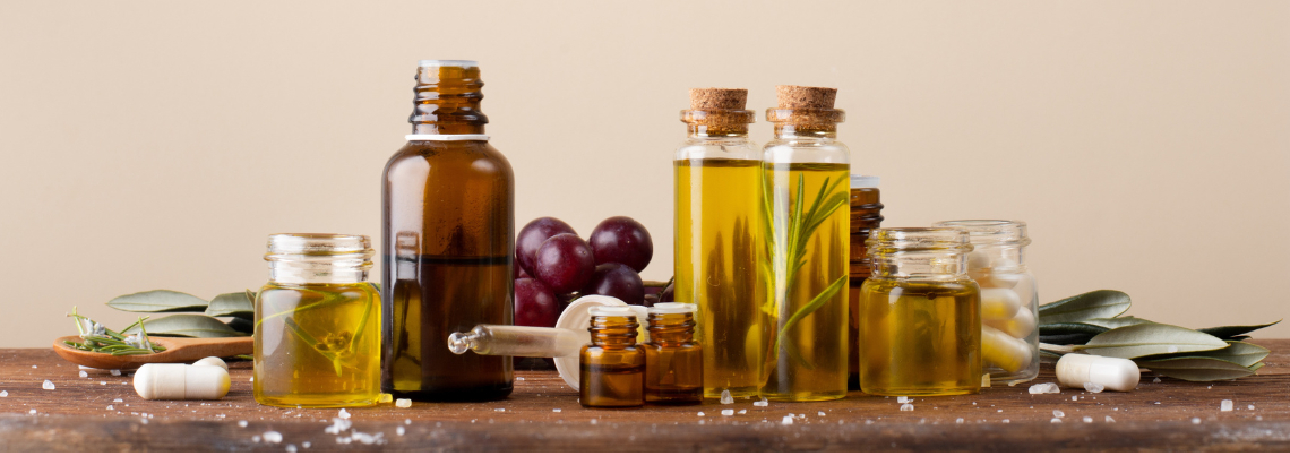
Every now and then, I enjoy revisiting topics, and this one is particularly dear to me. For the simple reason that we Indians use cooking oil daily and also at high smoke points, and the refined oil industry is one of the culprits behind inflammation. Cooking oils become a big question mark as it’s been touted as a culprit for heart diseases and then a superfood as well. So, go on reading if you’d like more ‘gyan’ on the subject of cooking oils. In today’s context of oils, we must ask ourselves a few questions about the oils we use: how do they behave when heated, and how much is consumed? Of course, reusing is not recommended at all.
Choosing a healthy oil
The subject of healthy cooking oils is one of the most misunderstood subjects in health. The usual recommendation from nutritionists and dietitians is to use polyunsaturated oils like corn and soybean oil, as well as monounsaturated fats like olive and canola. Polyunsaturated vegetable oils like corn, sunflower, and soybean contain an ingredient called linoleic acid (an essential fatty acid). When heated, as we do in Indian cooking, they become unstable and break down as they are polyunsaturated in nature. This leads to the formation of what we term ‘free radicals’ in the body. The essential fatty acids, which should actually help you, are broken down and cause you more harm.
Picture a clean wall (your cell structure) with cracks and holes. Free radicals are the cracks and holes. What you need is a primer (the right antioxidants and the right oil) to fill up these cracks and holes. But what we do instead is keep making more cracks and holes by constantly eating the same oils. With an increase in cracks and holes, you set the stage for diseases of all sorts to hit you sooner than you can imagine.
Polyunsaturated vegetable oils like flax, sunflower, chia, walnuts, and soybean should be eaten in their raw form and also used raw. Oils which are polyunsaturated in nature are best for salad dressings, but not for cooking. If at all you wish to use polyunsaturated oils, make sure you buy cold-pressed oils. Do not allow the oil to smoke. That’s when it starts to turn bad.
Which oils work well for us?
Monounsaturated fats are the best for cooking, especially when coupled with some blended oils. These fats are like polyunsaturated fats since they provide EFAs or essential fatty acids, which nourish many of the body’s functions, including maintaining healthy skin. Many sources of monounsaturated fats are usually good sources of Vitamin E, which is an excellent antioxidant. These oils will not break down or become unstable.
Preferred oils should all be cold-pressed like extra virgin olive oil, sesame oil, mustard oil (heart protector), coconut oil, and ghee. Blending improves the usage properties of certain oils, like shelf life, smoke point, frying stability, taste, and odour. Some blends in the Indian market use safflower seed (kardi) oil, rice bran oil, soybean oil, and corn oil. For example, using a blend of rice bran and safflower oil, rather than either of them separately, can help reduce cholesterol. Remember, don’t let your oil go beyond its smoke point or reuse your oil.
Smoke points and oil
I talked about smoke point in the year 2012 in my book The Beauty Diet. Smoke point is the temperature at which the oil starts to burn. This is the point when you push the oil to its maximum limit. When we cook, we do not want our oil to reach the point where it breakdown causing free radicals, or oxidises, and refining oil raises its smoke point, but it is not necessarily good for you. As they’re refined to a point where the antioxidant properties of the oil are taken away. So get your oil to a stable temperature, and then start the cooking or do a tarka.
The higher the smoke point, the better. This is terminology to let you know that the oil can be pushed a bit, but cooking when it actually starts smoking is not what you want. Cold-pressed oils are stable in that sense compared to refined oils, in that they behave well under high-heat cooking. Sesame oil (cold-pressed) can be heated to a higher temperature. If you are stir-frying, tempering (tarka) your dals, or making stews or curries, use sesame oil. This method of cooking also kills the nutty smell. I figured this out when I was in Orissa conducting many focus groups on sesame oil. Orissa is the biggest consumer of sesame seed oil in the Indian market. Also, extra virgin olive oil (EVOO), while believed to be too delicate for high heat cooking, is actually more stable than most oils with much higher smoke points. EVOO is packed with polyphenols and antioxidants, which act like aheat shield, preventing this oil from breaking down into harmful compounds.
Using a diverse range of oils
I always tell people that at any given time, I have 3-4 different cold-pressed or wood-pressed oils on my shelf. My menu governs what cooking oil I will use on any given day. Besides, different oils bring in different nutrients. I rotate my oils. Traditionally, we Indians would use different oils, but now in my practice, I have seen my clients come to me saying they use just 1 oil in their kitchens. Sometimes in large joint families, this is more common. It's best to use at least 2-3 different oils in your kitchen.
CLEAN out unhealthy Fats
By unhealthy fats, I mean hydrogenated and trans fats. These usually come via processed and refined foods, such as biscuits and Indian fried savoury products like: khakra, soy chaklis, nachni chips, chivda. They are used in these products as they extend shelf life. They definitely promote inflammation. Cell walls are made of fat, and therefore, they need healthy fats to exchange nutrients from your bloodstream and prevent toxins from entering them. Clean up your intake of saturated fats from dairy and meats (and refined cooking oils that will cause the omega 6 ratio versus the omega 3 ratio to flip, leading to inflammation. Unhealthy fats feed the bad microbes, the ones that will cause harmful pathogens to propagate themselves, cause mutation of the cells and lead to inflammation. For e.g., most refined oils say they are fortified with omega-6. However, too much of this type of fat is pro-inflammatory, soavoid concentrated sources of omega-6 oils. Anything that says ‘partially hydrogenated fats,’ trans fats,’‘interesterified fats,’‘high stearate,’ or ‘stearic-rich fat’ should be avoided. Also, avoid all refined oils made from corn, peanut, palm, safflower, soybean, and sunflower.
The good saturated fats
Most of my friends are horrified when I tell them that I use ghee and coconut oil in my food, and are rarely convinced about their good properties. Let’s take a minute and educate ourselves on this subject.
There are three types of fatty acid chains: long, medium, and short. Longer-chain fatty acids need to be digested by bile salts (secreted by the gall bladder); short-chain fatty acids are taken in directly during lipid digestion, i.e., when consuming liquid fat (oil). Both short and medium-chain fatty acids are used directly for energy production; medium-chain fatty acids are broken down almost immediately by enzymes in the saliva and gastric juices, so that pancreatic fat-digesting enzymes are not even essential. Therefore, there is less strain on the pancreas and digestive system, and they are used directly for energy and bypass this process. They do not have any negative effect on people with cholesterol or heart disease. Both coconut oil and ghee have medium-chain fatty acids (MCFAs).
1) Ghee
Ghee features everywhere in Indian cooking. And there’s a good reason for it. According to the Ayurvedic tradition, it enhances ‘ojas’ (Sanskrit for vigour), an essence that governs the tissues of the body and balances the hormones. Apart from that, ghee has a very high smoke point and doesn’t burn easily during cooking. It has more stable saturated bonds and so is less likely to form dangerous free radicals when cooking. During the process of clarifying milk to obtain ghee, proteins are removed, and it becomes lactose-free, thereby increasing its nutritional value. The fatty acid (butyric acid) that ghee contains has anti-viral properties and is believed to inhibit the growth of cancerous tumours. It also has antioxidant value and aids in the absorption of minerals and vitamins from food.
Okay, so that doesn’t mean you start eating it by the spoonful. Up to 1 tbs a day is all that’s required to keep your skin glowing and to add richness to your food. A word of caution to people with high cholesterol: ghee, at the end of the day, is still saturated fat and needs to be consumed carefully.
2) Coconut oil
Years of eating foods rich in trans fats, deep-fried food, and other harmful fat sources make it difficult for people to digest fat. And what is the result? It goes into your fat cells. Because coconut oil has MCFAs (lauric acid 50 per cent), it does not require bile for digestion. The body turns these fatty acids directly into energy, making it apt for losing weight. In 1998, researchers at McGill University discovered that, compared to other types of fatty acids, MCFAs (in coconut oil) use up energy when processed, and act as weight loss agents. Lauric acid is proven to be antibacterial and antifungal, and it helps keep your immunity strong. Coconut oil is one of the most potent sources of lauric acid, and for this, experts say it should be called an ‘essential fatty acid’.
Coconut oil took centrestage because of Dr Mary Enig, an international expert on fats, when she first referred to it as the queen of saturated fats because of its special properties. It has a ‘thermogenic effect’, raising your body temperature and boosting your energy and metabolic rate, which aids weight loss. According to Enig, eliminating fat altogether or the intake of low-fat foods causes your body to store more fat. Bad carb consumption can cause blood sugar surges and drops. As a result, you lack sustained energy and experience hunger. Eating the right fats stabilizes blood sugar levels and provides a steady fuel supply throughout the day. When you consume healthy amounts of good-quality saturated fats, the body needs less of the Omega-3 and Omega-6 (essential fatty acids). You’ll have more energy for work, exercise, and social activities, which will directly lead to a healthy lifestyle. If you have trouble digesting fats or are coming out of a low or no-fat approach to diet, it’s best to start with coconut oil.
In a nutshell:
- Use good-quality cooking oils, mainly cold-pressed or wood-pressed oils
- Use them in the right quantities and not in excess
- Use different oils in your household for your cooking (rotate oils)
- Use your oil at a temperature before it reaches its smoking point
- Avoid reusing your cooking oil
Tags
#cooking oils #best oil to use #heart health