11
2026
Male Balding and Alopecia: A Macrobiotic Perspective on Why It Happens — and How Food Can Help
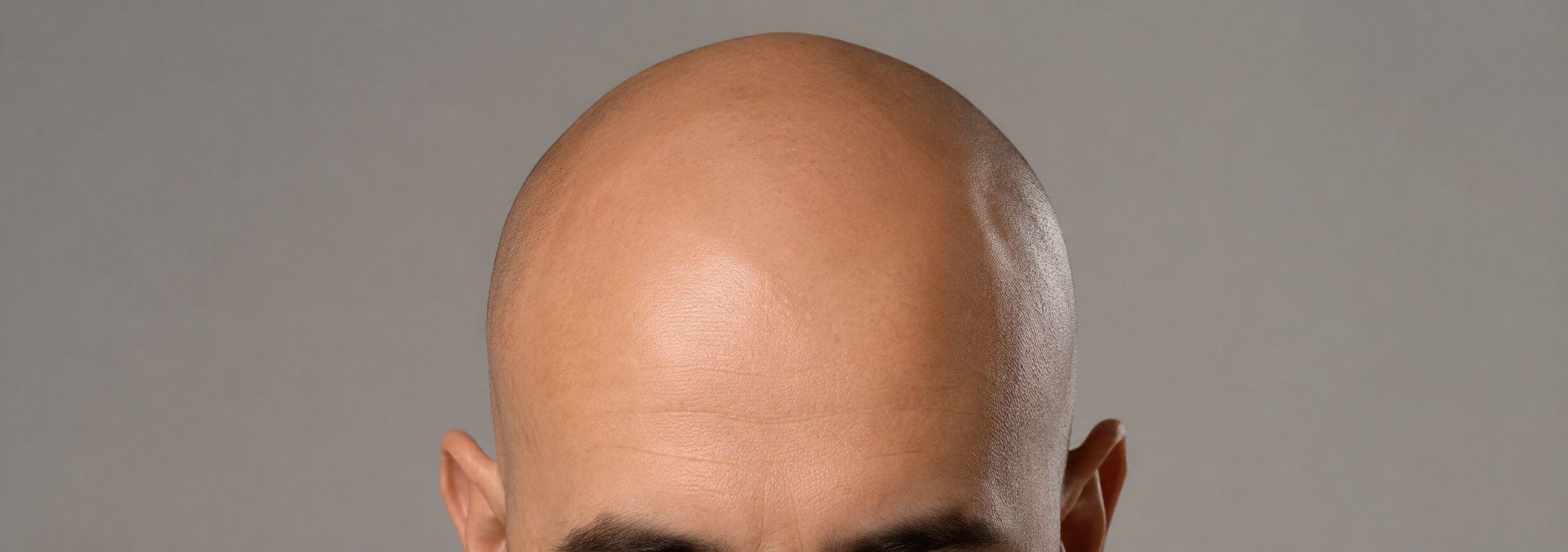
Hair loss is one of those conditions that Western medicine treats mostly on the surface — genetics, hormones, a prescription, maybe a transplant. But if you look at balding through a Macrobiotic and Traditional Chinese Medicine lens, the story runs much deeper. Hair isn't separate from the body's internal terrain. It's a mirror of it. And in men, thinning hair and alopecia are almost always telling you something about the state of your kidneys, your blood, and your liver, long before they show up on your scalp.
Why It Happens: The Internal View
1. The Kidney Connection
In TCM, hair is considered "the flower of the kidney." The kidneys store what's called jing, or essence — the deep reserve of vitality you're born with and slowly spend over a lifetime. When kidney essence is strong, hair stays thick, dark, and rooted. When it's depleted — through age, chronic stress, overwork, poor sleep, or excessive sexual activity — hair follicles lose their nourishment and hair begins to thin, grey, or fall out prematurely. This is why male pattern baldness so often tracks alongside other signs of kidney depletion: lower back weakness, fatigue, ringing in the ears, or reduced vitality.
2. Blood Deficiency
Hair is also nourished by Blood in the TCM sense — not just the red fluid in your veins, but a broader concept of nourishing, circulating vitality. When Blood is deficient (often from poor digestion, chronic stress, or a diet that doesn't build strong blood), the scalp doesn't get what it needs, and hair becomes dry, brittle, and prone to falling.
3. Liver and Stress
The liver governs the smooth flow of qi throughout the body. Chronic stress, frustration, and suppressed emotion cause liver qi to stagnate, which restricts circulation to the scalp. This is one reason we so often see hair loss accelerate during periods of high stress or emotional upheaval — it's not a coincidence, it's physiology.
4. Diet and Blood Sugar
From a Macrobiotic standpoint, excess consumption of extreme foods — too much sugar, dairy, fried food, alcohol, or conversely too much raw and cold food — creates internal imbalance that shows up as inflammation, poor circulation, and weakened digestion. Since hair is one of the last tissues to receive nourishment (the body prioritises vital organs first), it's often the first place you see the effects of a poor diet.
5. Androgenic Factors
Conventionally, male pattern baldness is linked to DHT (dihydrotestosterone), a hormone derivative that shrinks hair follicles in genetically sensitive men. Macrobiotics doesn't dispute this biology — but it asks a further question: what is driving excess DHT sensitivity and hormonal imbalance in the first place? Often, it traces back to liver function, since the liver metabolises hormones, and to the overall load of processed food, sugar, and stress the body is carrying.
Macrobiotic and TCM Food Recommendations
The Macrobiotic approach to hair loss isn't about a single miracle food — it's about rebuilding kidney essence, nourishing blood, and supporting smooth liver function through a whole way of eating.
Black Foods for the Kidneys
In TCM, black-coloured foods are believed to specifically nourish kidney energy — a strong signal, and one Macrobiotic practice fully embraces.
- Black sesame seeds – Perhaps the single most recommended food for hair health in Chinese medicine. A tablespoon of ground black sesame daily, added to congee, grains, or vegetables, is considered deeply nourishing to kidney essence and to the hair itself.
- Black beans – Cooked with a small piece of kombu, black beans build kidney energy and blood.
- Black rice – A wonderful base grain to rotate in for its kidney-supportive, mineral-dense qualities.
- Sea vegetables – Rich in minerals, especially iodine and iron, sea vegetables strengthen the kidneys and blood, and are a Macrobiotic staple for exactly this reason.
Sea Vegetables More Broadly
Beyond hijiki, kombu, wakame, and nori all bring concentrated minerals that support hormonal balance, thyroid function, and blood quality — all essential terrain for healthy hair. A simple wakame miso soup, eaten regularly, does more for hair than most topical treatments.
Whole Grains for Steady Blood Sugar
Balancing blood sugar is central to Macrobiotic eating, and it matters here too — sugar spikes and crashes stress the liver and adrenal-kidney axis. Brown rice, millet, barley, and other whole grains, eaten as the foundation of each meal, provide slow, steady energy that takes pressure off these organs.
Walnuts and Other Kidney-Shaped Foods
Macrobiotic and TCM thinking both point to a simple visual logic: walnuts resemble the kidney and are believed to nourish it. A small daily handful, along with other nuts and seeds like sunflower and pumpkin seeds, supports scalp circulation through their essential fatty acid content.
Bone Broth and Mineral-Rich Soups
For those who eat animal foods, a well-made bone broth is considered deeply restorative to kidney essence. For those following a more plant-based Macrobiotic path, a long-simmered root vegetable and kombu broth serves a similar purpose — building deep, grounding nourishment.
Leafy Greens and Root Vegetables
Dark leafy greens build blood, while root vegetables like burdock (gobo), carrot, and daikon support the liver's detoxifying and qi-moving functions. Burdock root, in particular, is a Macrobiotic favourite for its deep, grounding energy and its traditional use in strengthening hair and skin.
Foods and Habits to Minimise
- Refined sugar and excessive sweets, which deplete kidney energy over time
- Dairy and greasy, fried foods, which create dampness and clog circulation
- Excessive alcohol and caffeine, which stress the liver and adrenal-kidney system
- Iced drinks and raw, cold food in excess, which weaken digestive fire and, by extension, the body's ability to extract nourishment for hair
The Bigger Picture
Hair loss in men is rarely just about hair. It's a visible signal of what's happening at the level of kidney essence, blood quality, liver function, and digestion. A Macrobiotic approach doesn't promise to reverse genetics — but it does offer a way to strengthen the internal terrain so that whatever hair you have is better nourished, and so that the deeper systems governing vitality, hormones, and ageing are given real support.
Food alone won't turn back a genetic clock. But it can absolutely change the environment your follicles are living in — and that's where lasting change begins.